FemiCore Ingredients: What's Inside?
Last Updated: August 2026 | Published: August 2026
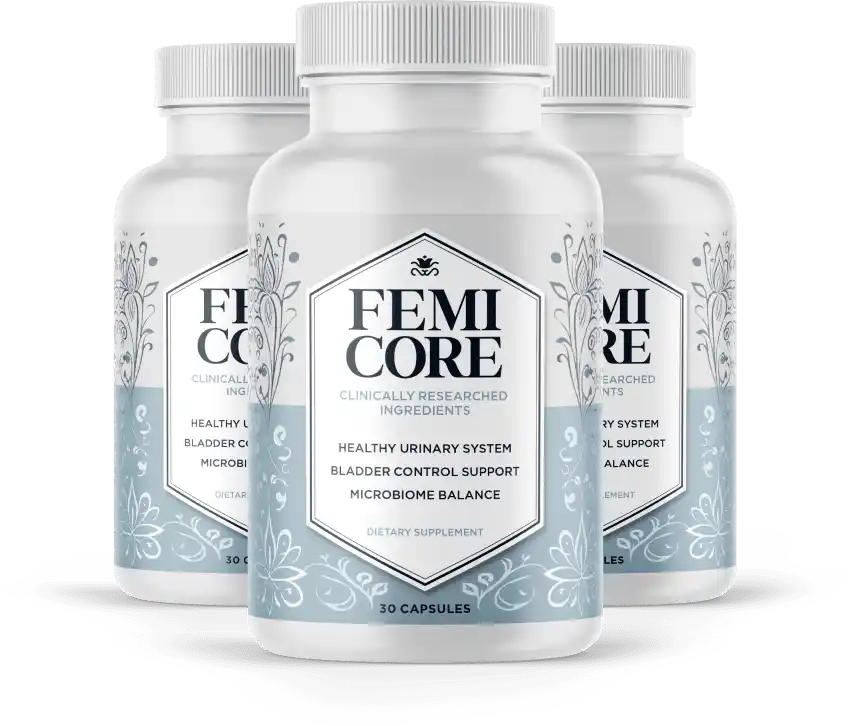
What is FemiCore? FemiCore is a daily dietary supplement formulated for women to support bladder control, urinary comfort, and a balanced urinary microbiome. It combines botanical extracts with five Lactobacillus probiotic strains in a single capsule. FemiCore is made in the United States and is not a medication.
FemiCore Quick Facts
This table summarizes the essential product details for quick reference.
| Product Name | FemiCore |
| Category | Women's Bladder / Urinary Health Dietary Supplement |
| Serving Form | Capsule |
| Supply per Bottle | 30 capsules (30 days) |
| Key Ingredients | Cranberry Extract, Bearberry, Mimosa Pudica, Berberine, L. crispatus, L. acidophilus, L. plantarum, L. gasseri, L. casei |
| Made In | United States |
| Facility Claims | FDA-registered, GMP-certified |
| Guarantee | 60-Day Money-Back Guarantee |
| How to Take | 1 capsule every morning with a large glass of water |
| Price Range | $49–$79 per bottle |
🇺🇸 Made in the USA: FemiCore is manufactured in the United States in an FDA-registered, GMP-certified facility.
Table of Contents
FemiCore Ingredient Summary Table
FemiCore uses a proprietary dual-blend structure per single-capsule serving (30 servings per bottle). The label discloses total blend weights but not individual ingredient quantities or CFU counts.
| Ingredient | Role / Function | Blend |
|---|---|---|
| Cranberry Extract (30% PACs) | Supports urinary tract health by interfering with bacterial adhesion | Herbal 350 mg |
| Bearberry (Uva Ursi) Leaf | Traditional urinary-tract support; contains arbutin | Herbal 350 mg |
| Berberine HCl 8% | Supports microbial balance | Herbal 350 mg |
| Mimosa pudica Seed Extract | Antioxidant and cleansing support | Herbal 350 mg |
| L. crispatus LCr86 | Urinary microbiome balance | Probiotic 50 mg |
| L. acidophilus LA88 | Digestive and immune support | Probiotic 50 mg |
| L. plantarum N13 | Gut and microbial balance | Probiotic 50 mg |
| L. gasseri LG08 | Women's wellness probiotic | Probiotic 50 mg |
| L. casei LC16 | Digestion and immune support | Probiotic 50 mg |
Cranberry Extract (Vaccinium macrocarpon)
Cranberry is the best-studied ingredient in FemiCore. Its proanthocyanidins (PACs) are believed to interfere with the adhesion of uropathogenic E. coli to the urinary tract lining. Williams G et al. (2023) systematically reviewed cranberry products for UTI prevention in women.
Bearberry (Arctostaphylos uva-ursi)
Also known as uva ursi, bearberry leaf has traditional use for urinary-tract support. It contains arbutin, which is metabolized to hydroquinone in the body. de Arriba SG et al. (2013) assessed the safety of uva ursi preparations.
Berberine
Berberine is a plant-derived isoquinoline alkaloid with documented broad antimicrobial activity in vitro. Molecules (2020) reported berberine chloride's activity against uropathogenic E. coli.
Mimosa pudica
Mimosa pudica seed extract is traditionally used for digestive and cleansing support and contains antioxidant compounds including flavonoids and tannins. Adurosakin OE et al. (2023) reviewed Mimosa pudica's antioxidant and antimicrobial properties.
Five Lactobacillus Probiotic Strains
FemiCore includes L. crispatus LCr86, L. acidophilus LA88, L. plantarum N13, L. gasseri LG08, and L. casei LC16. L. crispatus is one of the most prevalent protective Lactobacillus species in the healthy female urogenital tract. European Association of Urology (2025) discusses Lactobacillus in recurrent UTI prevention.
Safety Considerations
FemiCore is intended for healthy adult women. Cranberry may interact with blood thinners such as warfarin. Berberine may interact with several prescription medications. Pregnant or nursing women, individuals under 18, and those with medical conditions should consult a physician before use.
Scientific References
The ingredients in FemiCore have been studied in peer-reviewed publications. These references are provided for informational purposes and don't imply that FemiCore as a finished product has been clinically tested.
- Williams G, Stothart CI, Hahn D, Stephens JH, Craig JC, Hodson EM. Cranberries for preventing urinary tract infections. Cochrane Database of Systematic Reviews. 2023;11(11):CD001321.
- Fu Z, Liska D, Talan D, et al. Cranberry reduces the risk of urinary tract infection recurrence in otherwise healthy women: a systematic review and meta-analysis. J Nutr. 2017;147(12):2282-2288.
- de Arriba SG, Naser B, Nolte KU. Risk assessment of free hydroquinone derived from Arctostaphylos Uva-ursi folium herbal preparations. Regul Toxicol Pharmacol. 2013;67(1):116-122.
- Molecules (MDPI). In vitro and in vivo biological activity of berberine chloride against uropathogenic E. coli strains using Galleria mellonella as a host model. Molecules. 2020;25(21):5010.
- Adurosakin OE, et al. Ethnomedicinal uses, phytochemistry, pharmacological activities and toxicological effects of Mimosa pudica: A review. Pharmacological Research - Modern Chinese Medicine. 2023.
- European Association of Urology / Uroweb. Novel directions in the management of recurrent urinary tract infections (review article). 2025.
The 350 mg Herbal Blend
The herbal blend in FemiCore totals 350 mg per serving. This blend includes cranberry extract, bearberry leaf, berberine, and Mimosa pudica. While the total blend weight is disclosed, the exact amount of each individual ingredient is not listed on the label.
The 50 mg Probiotic Blend
The probiotic blend totals 50 mg per serving and includes five Lactobacillus strains. Lactobacillus crispatus is particularly notable because it is one of the dominant protective species in the healthy female urogenital tract. The other strains support general microbiome balance and digestive wellness.
Other Ingredients in FemiCore
In addition to the active herbal and probiotic blends, FemiCore capsules contain gelatin (capsule), brown rice flour, magnesium stearate, olive oil, and silicon dioxide. These are common excipients used in supplement manufacturing.
Ingredient Interaction Notes
Cranberry may interact with blood-thinning medications such as warfarin. Berberine may interact with diabetes medications, blood pressure medications, and other prescriptions. Always consult a healthcare provider before combining FemiCore with medications.
Why Are Cranberry PACs Important?
Proanthocyanidins (PACs) are the compounds in cranberry most associated with urinary health. FemiCore's cranberry extract is standardized to 30% PACs. Fu Z et al. (2017) conducted a meta-analysis showing cranberry reduced UTI recurrence in healthy women.
How Do the Probiotics Work?
Probiotics may support urinary health by colonizing the vaginal and urinary microbiome, producing substances that inhibit harmful bacteria, and supporting immune function. L. crispatus is particularly important because it is often the dominant protective species in the healthy female urogenital tract.
How Do the Ingredients Work Together?
FemiCore's formula is designed to provide both immediate botanical support and longer-term microbiome support. The herbal blend targets urinary environment comfort, while the probiotic blend supports the beneficial bacteria that help maintain balance. This dual approach is the rationale behind the 9-in-1 formula and its potential benefits.
FemiCore Ingredients FAQ
These are the most common questions about FemiCore ingredients, answered directly.
1. What ingredients are in FemiCore?
FemiCore contains cranberry extract (30% PACs), bearberry leaf, berberine HCl, Mimosa pudica seed extract, and five Lactobacillus probiotic strains: L. crispatus, L. acidophilus, L. plantarum, L. gasseri, and L. casei.
2. How does cranberry extract support urinary health?
Cranberry proanthocyanidins (PACs) are believed to interfere with the adhesion of uropathogenic E. coli to the urinary tract lining, supporting urinary tract health.
3. What is bearberry used for?
Bearberry (uva ursi) leaf has traditional use for urinary-tract support and contains arbutin, which is metabolized to hydroquinone in the body.
4. What is berberine?
Berberine is a plant-derived isoquinoline alkaloid with documented broad antimicrobial activity in vitro, supporting microbial balance.
5. What is Mimosa pudica?
Mimosa pudica seed extract is traditionally used for digestive and cleansing support and contains antioxidant compounds including flavonoids and tannins.
6. Which probiotic strains are in FemiCore?
FemiCore includes L. crispatus LCr86, L. acidophilus LA88, L. plantarum N13, L. gasseri LG08, and L. casei LC16.
7. Are FemiCore ingredients natural?
The formula is described as non-GMO and stimulant-free. The active ingredients are botanical extracts and probiotic strains.
8. Where is FemiCore manufactured?
FemiCore is manufactured in the United States in an FDA-registered, GMP-certified facility.
FemiCore Ingredients Summary
FemiCore combines botanical extracts and probiotic strains into a 9-in-1 urinary microbiome formula. Each ingredient is chosen for its traditional or research-supported role in women's bladder and urinary wellness.
Research on Cranberry for Urinary Health
Cranberry is one of the most studied natural ingredients for urinary health. Multiple systematic reviews and meta-analyses have examined its role in reducing urinary tract infection recurrence. The key mechanism appears to be the ability of cranberry proanthocyanidins to prevent bacteria from adhering to the urinary tract lining. Fu Z et al. (2017) published a meta-analysis in the Journal of Nutrition on cranberry and UTI recurrence.
Research on Berberine
Berberine has been studied for its antimicrobial, anti-inflammatory, and metabolic effects. In laboratory studies, it has shown activity against various bacteria, including uropathogenic E. coli. A 2020 study in Molecules reported berberine chloride's effects against uropathogenic E. coli in vitro and in an in vivo model.
Research on Lactobacillus and Urinary Health
Lactobacillus species, particularly L. crispatus, are dominant in the healthy female urogenital tract. Research suggests that maintaining beneficial Lactobacillus populations may support urinary microbiome balance and reduce susceptibility to urinary issues. The European Association of Urology (2025) reviewed novel directions in recurrent UTI management, including Lactobacillus.
Traditional Use of Bearberry and Mimosa pudica
Bearberry leaf has a long history of traditional use for urinary tract support in various herbal medicine systems. Mimosa pudica has been used traditionally for digestive and cleansing purposes. While traditional use doesn't constitute clinical proof, it provides context for why these ingredients were included in the formula.
What Are the Non-Active Ingredients?
In addition to the active herbal and probiotic blends, FemiCore capsules contain gelatin, brown rice flour, magnesium stearate, olive oil, and silicon dioxide. Gelatin forms the capsule shell. Brown rice flour is a filler. Magnesium stearate and silicon dioxide are common manufacturing aids. Olive oil may help with the stability of fat-soluble components.
How Are the Probiotics Protected?
Probiotic viability depends on manufacturing, packaging, and storage conditions. FemiCore should be stored in a cool, dry place away from direct sunlight. Avoid exposing the bottle to excessive heat or moisture, as these can reduce probiotic potency.
Does FemiCore Undergo Quality Testing?
FemiCore is manufactured in an FDA-registered, GMP-certified facility. GMP standards require documented procedures for ingredient testing, production, and packaging. While the manufacturer does not publish third-party test results on the public website, the GMP certification provides a baseline quality assurance.
Allergen and Dietary Information
The label lists gelatin, which is derived from animal sources, so FemiCore is not suitable for vegetarians or vegans. The formula is described as non-GMO and stimulant-free. Check the official product label for the most current allergen and dietary information.
How Does FemiCore's Formula Compare?
Compared to single-ingredient cranberry supplements, FemiCore provides a broader approach by including bearberry, berberine, Mimosa pudica, and five probiotic strains. Compared to generic probiotics, it adds urinary-support botanicals. This combination is the key differentiator of the FemiCore formula.
Why Aren't Individual Dosages Disclosed?
FemiCore uses proprietary blends, which is a common practice in the supplement industry. While this protects the manufacturer's formula, it also means consumers cannot know the exact amount of each ingredient. This is a consideration when evaluating the product.
Why Is Standardization Important?
Standardization ensures that an extract contains a consistent level of active compounds. FemiCore's cranberry extract is standardized to 30% proanthocyanidins (PACs), which means each serving provides a predictable amount of the compounds most associated with urinary health. This is a quality marker that distinguishes premium supplements from generic alternatives.
Why CFU Counts Matter
Colony-forming units (CFUs) measure the number of viable probiotic bacteria in a supplement. Higher CFU counts are often associated with greater probiotic potency, though strain quality and viability also matter. FemiCore's label lists a 50 mg probiotic blend but does not disclose CFU counts, which is a limitation for consumers comparing products.
Herbal Safety Considerations
While the herbs in FemiCore have traditional and research-supported uses, they are not appropriate for everyone. Bearberry (uva ursi) should not be used long-term or in high doses. Berberine may interact with medications. Pregnant and nursing women should avoid FemiCore unless approved by a healthcare provider.
Conclusion
FemiCore's formula combines cranberry PACs, bearberry, berberine, Mimosa pudica, and five Lactobacillus probiotic strains into one daily capsule. These ingredients are associated with urinary comfort, microbial balance, and bladder support — though individual results may vary.